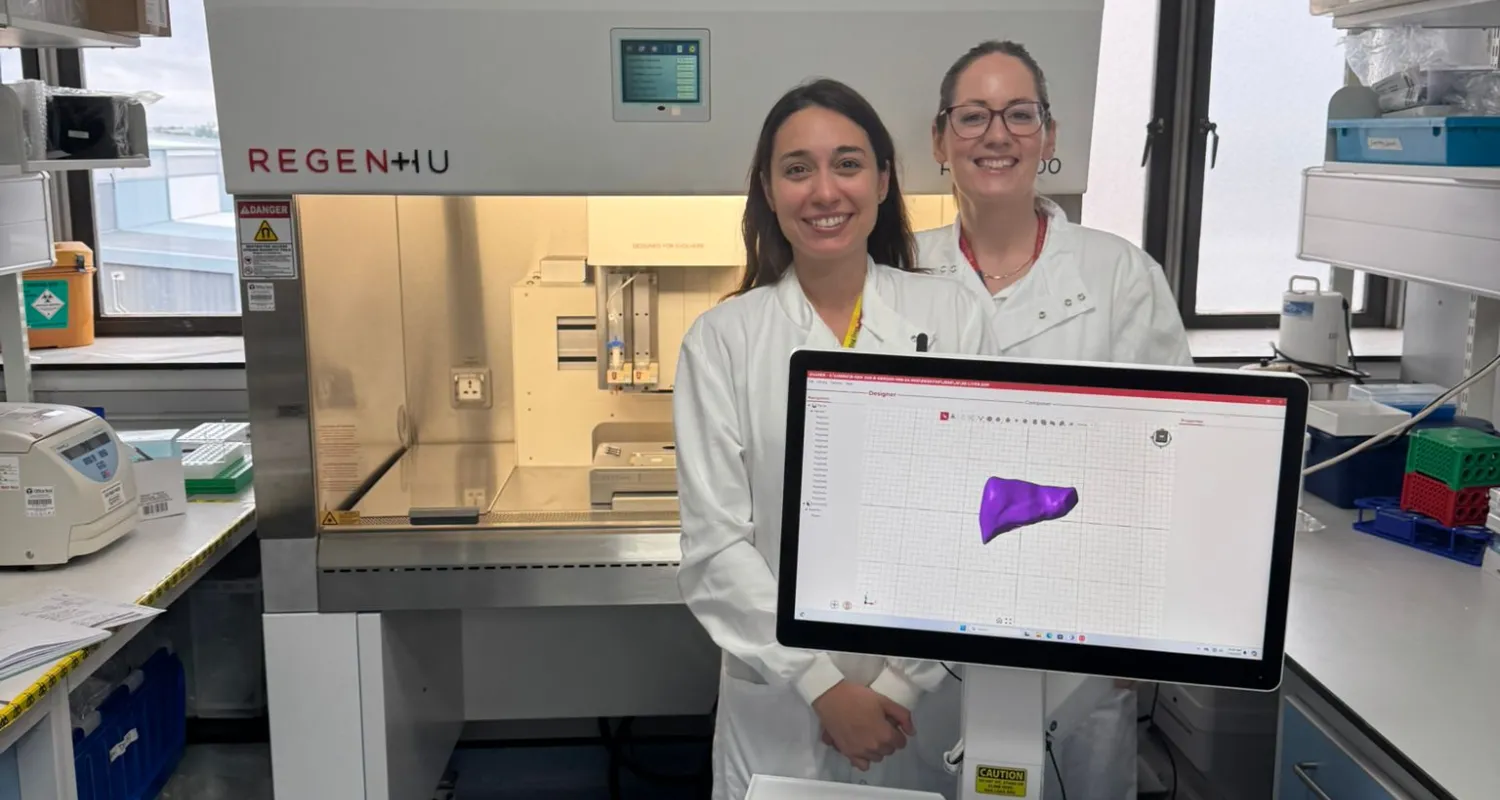
With the generous support of visionary donors Pallak and Faiza Seth, we have acquired a cutting-edge 3D bioprinter that hopes to revolutionize the future of paediatric liver care.
Installed at the Charity-funded MowatLabs, part of King’s renowned paediatric liver research programme, the new bioprinter will help researchers explore innovative alternatives to liver transplants, offering new hope to children with liver disease.
Beyond transplants: a new frontier in liver therapy
Liver transplants, while often lifesaving, require patients to take lifelong immunosuppressants. These medications can significantly affect a person’s quality of life and lead to potential health complications. The team at MowatLabs is aiming to change that.
The team’s research focuses on developing advanced therapy medicinal products (ATMPs), treatments that can temporarily take over the liver’s function. These therapies could buy patients valuable time to receive a transplant or, in some cases, allow the liver to heal without surgery.
Bioprinting the future
The 3D bioprinter enables scientists to create a realistic biological environment that mimics the structure and function of the human liver. This cutting-edge technology will help accelerate the development of next-generation therapies that could one day eliminate the need for transplants altogether.
Dr Nulty added:
“What makes this especially meaningful is that, through the Charity, I’ve been able to meet families whose children might benefit from our work. Being able to say, ‘This could help someone like your daughter or grandson,’ is incredibly powerful.”
A legacy of leadership in liver care
King’s College Hospital is a national and international leader in liver care. Its Liver Transplant Unit is the largest in Europe, performing over 200 transplants each year. The addition of this bioprinter further strengthens its position at the forefront of medical innovation.
We remain deeply committed to advancing liver care. From funding world-class equipment to supporting groundbreaking paediatric research, we are helping deliver life-saving treatments, and transforming what’s possible for children with liver disease.