
How the Teddy Bear Hospital works
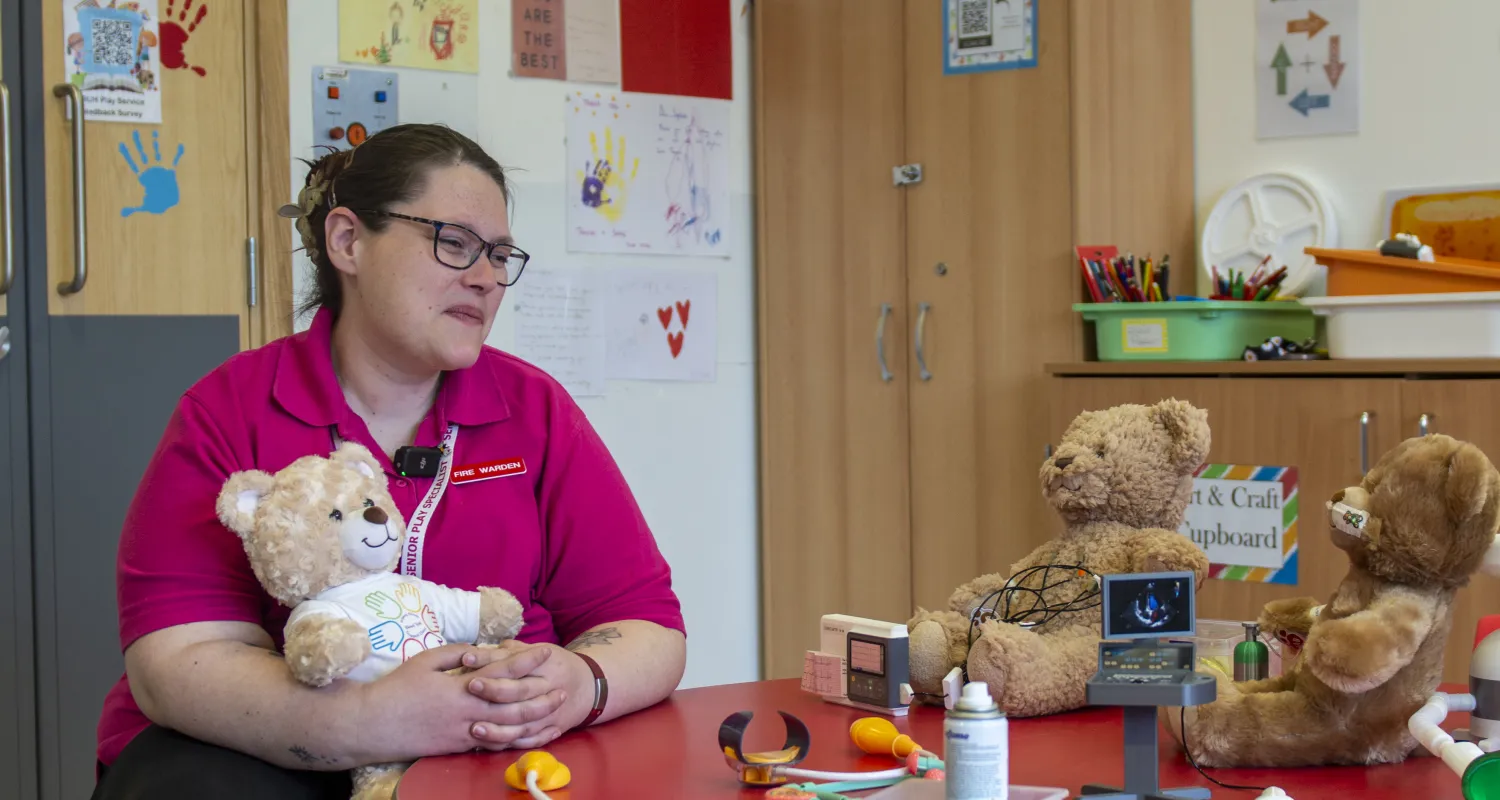
Staff use miniature replica medical equipment, including a tiny electrocardiogram (ECG) and intravenous IV drip, complete with cannula and port, on cute teddy bears to demonstrate different medical procedures in a way that children can easily understand.
The Teddy Bear Hospital was developed by Sophie Roffe, Senior Healthcare Play Specialist at the Princess Royal Hospital in Orpington.
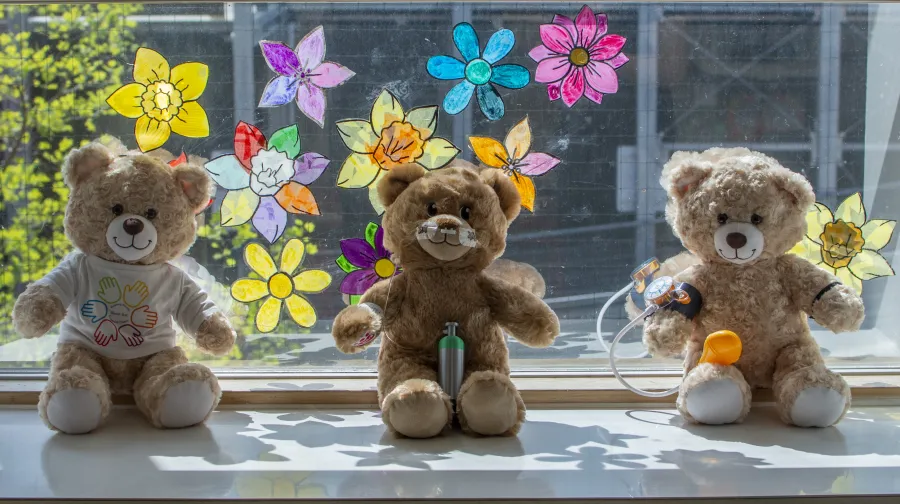
It has a range of different bears related to medical conditions and tests. They enable children to ask questions and explore for themselves how medical equipment works, in a supportive setting. For example, there is ‘a diabetes bear’, complete with a small insulin pen, finger prick and glucose monitoring device and an ‘oxygen bear’ with a nasal cannula and oxygen cylinder.
There is also ‘a blood bear’ which Sophie uses to show children what to expect during a blood test. She uses the bear to demonstrate fitting a tourniquet, applying a cold freeze spray and then inserting a needle. Then, using a small syringe she draws up dyed red liquid from a bottle located inside the specially adapted bear.
This approach helps to show children step by step what is involved during the procedure. It has proved especially helpful for calming neurodivergent children before having blood tests, who cannot always verbalise their emotions and sometimes end up lashing out in frustration.
The Teddy Bear Hospital is funded by King’s College Hospital Charity- thanks to donations made by The King's Lottery players.
How children benefit from the Teddy Bear Hospital
Sophie has helped to ease the anxiety of many children coming to the PRUH, making them feel more comfortable and calmer about what to expect in hospital.
They include a little girl who was afraid of having a nasogastric (feeding) tube fitted after clinical staff had attempted several times to do this. Sophie ‘practised’ fitting a similar small tube on a teddy bear first to show her what was involved.
Later she took the teddy bear to the girl when she was having the actual tube fitted and she had it done at the same time as the bear was fitted with a small replica one. This helped make the experience less overwhelming.
In another case, a young boy with a learning disability was afraid of having a blood test done. He was panicking and at one stage things looked like it could develop into a situation where he would need to be restrained. With the help of the Teddy Bear Hospital, staff were able to try a different approach with him.
Sophie worked with the young boy, playing his favourite music during his first hospital visit to get him accustomed to the environment and create a positive experience for him. He soon became at ease and even ended up dancing in the hospital.
On his second visit she showed him what would happen during the blood test, using a teddy bear. Afterwards, when he had the blood test done, he showed no resistance and seemed very happy. Later, he even said he said he did not want to leave the hospital.
Watch our interview below with Sophie about the Teddy Bear Hospital.
The Teddy Bear Hospital, which first launched in late 2025, supports children aged between 3-16 years old.
Feedback from parents of children using the Teddy Bear Hospital has been overwhelmingly positive and it has significantly helped to reduce anxiety for both children and parents coming to the hospital.
A parent's experience of the Teddy Bear Hospital
"My daughter was incredibly anxious when we were told that she had diabetes. She was scared of the insulin injections and the finger pricks and didn't really understand why she had to have them.
“Sophie came in with Milli, the diabetes bear, along with toy-sized diabetes equipment for the bear. She explained how the finger pricks are done, and why we do them. Milli the bear had a Dexcom (glucose monitoring device) on her arm, and it made my daughter feel less anxious about having her own Dexcom fitted.
“The bear really helped my daughter to see that it wasn't as scary as she first thought, and the bear became my daughter’s friend, a furry companion that went through my daughter’s diabetes routine with her."
The Teddy Bear Hospital is one of the ways that King’s College Hospital Charity helps to enhance the hospital environment and make it as comfortable as possible, for patients of all ages.